
Buyer questions from China sourcing
Can an inspection pass and an ecommerce order still be wrong?
Yes. A factory visit may confirm that accessible goods look acceptable while leaving a different buyer question unanswered: is this the exact sellable version the customer is meant to receive?
Abstract
For overseas ecommerce buyers, the risk is often not a dramatic product defect. It is a detail that was never made specific enough to compare on site: a SKU variation, a bundle, retail packaging, a unit label, a barcode, a carton mark, or an insert. This note explains how that gap appears and what a buyer can clarify before inspection.
What does a generic inspection checklist actually confirm?
Answer
A reusable inspection checklist gives the visit a sensible baseline: product appearance, workmanship, accessible function, packaging, labels, cartons, quantities, and sampling. That structure is useful. It tells the inspector where to look and gives the buyer a way to review visible findings.
The limitation is that a broad category does not identify the exact commercial detail that matters for one order. “Check labels” does not say which label belongs to which variation, where it should sit, or which buyer file is the reference. “Check packaging” does not by itself distinguish a retail box, inner bag, warning, insert, or outer-carton mark.
Where can an ecommerce order fall through that checklist?
Answer
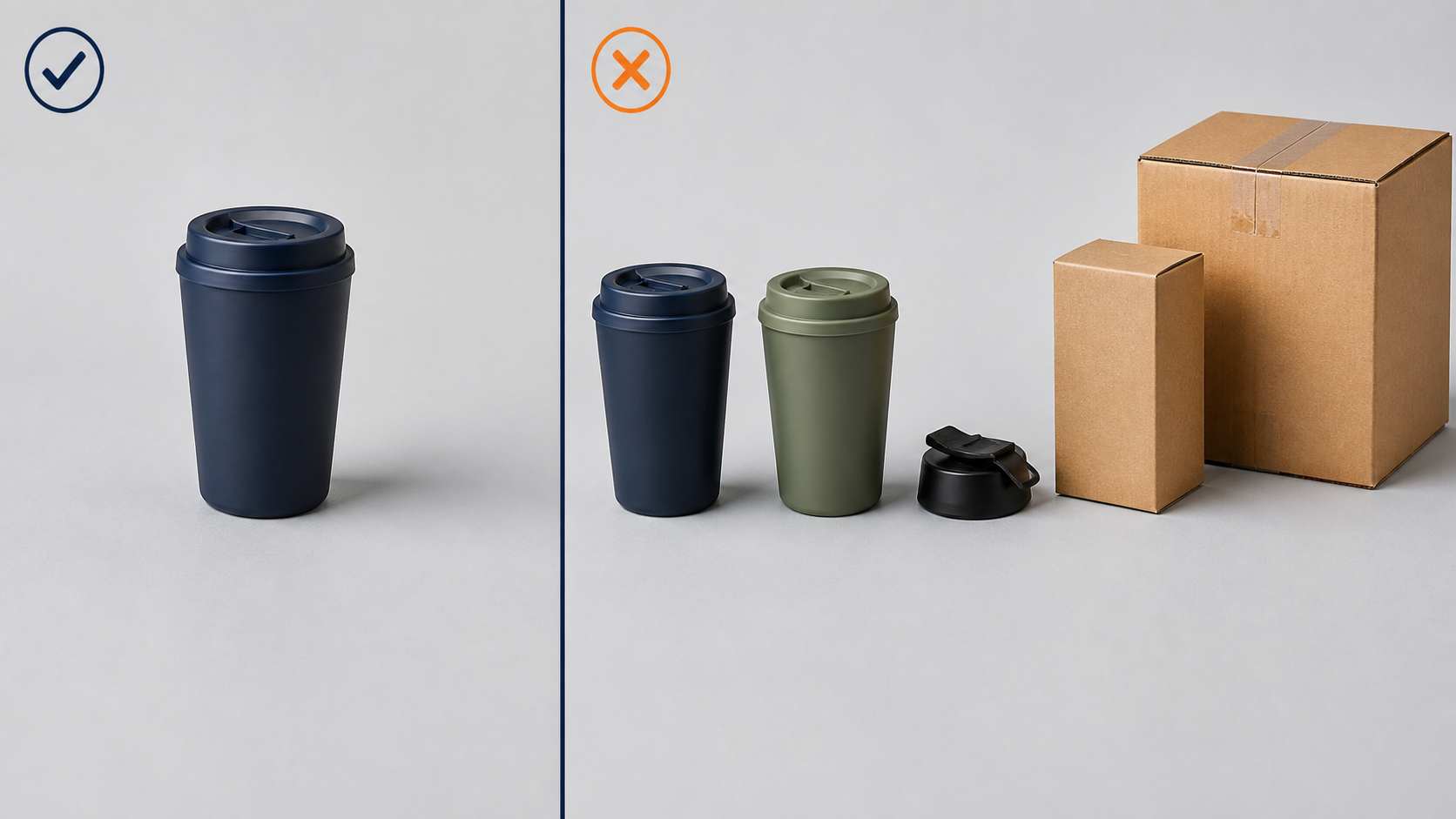
Ecommerce makes small physical distinctions commercially important. A customer may receive the wrong color, a bundle with one accessory missing, a correct product in the wrong retail box, or a unit whose barcode and carton information do not match the buyer's reference. None of those situations requires a visibly broken product.
This is why an order can look broadly acceptable at the factory while still creating a hard question after shipment. The inspection was not necessarily poor. The comparison point may simply have been too general for the sellable version the buyer had in mind.
What should the buyer clarify before asking for inspection?
Answer
Start with the version that the customer is supposed to receive: the SKU, variation, color, size, bundle, accessory count, and any buyer-approved product detail. Then put beside it the references that can be used on site: the product page or listing, approved samples, packaging artwork, label and barcode files, and carton requirements.
The buyer can also name the evidence needed for the next decision. Some questions need a photo; some need a short video view, an accessible function check, a measurement, or an agreed live-video checkpoint. AQL or an Inspection Working Instruction can provide a structured method, but the buyer's files are what connect that method to the real order.
Can an inspection make the shipment decision for the buyer?
Answer
No. An on-site inspection can compare accessible goods, packaging, labels, cartons, and quantities with agreed buyer references. Photo and video evidence and a 24-hour English report can give the buyer a clearer record for the next conversation with the supplier.
That record is not laboratory testing, certification, regulatory review, marketplace approval, fulfillment acceptance, or automatic shipment release. Those are separate responsibilities. The buyer remains responsible for the final commercial decision.